Most restaurant marketing spend goes toward attracting new customers, and very little goes toward keeping the ones already acquired. This is backwards economically, because acquiring a new customer through advertising, promotions or discovery consistently costs considerably more than retaining an existing one who already knows and likes the restaurant. If you want expert help, see our SEO services.
Restaurant customer loyalty is not primarily about a stamp card or a points programme, though those have a role. It is about building the systems and habits that turn a one-time visitor into someone who orders regularly, without requiring constant discounting to bring them back.
Why Retention Matters More Than Most Owners Realise
A repeat customer requires no acquisition cost for that visit. Every marketing pound spent attracting a new customer is spent once. A retained customer who orders monthly generates revenue repeatedly from that same original investment, which fundamentally changes the economics of the business over time.
Repeat customers spend more per visit on average. Familiarity with the menu, trust in the quality, and comfort with the ordering process all tend to increase order value compared to a first-time customer who is being cautious.
Repeat customers refer others. Word of mouth from a genuinely satisfied regular customer carries more weight and costs nothing compared to paid advertising, and it compounds over time as the base of loyal customers grows.
A restaurant living entirely on new customer acquisition is fragile. Any interruption to advertising spend or new customer discovery directly threatens revenue. A restaurant with a strong base of returning customers has more stability and predictability in its revenue.
Why Customers Do Not Return, Even When Satisfied
This is worth understanding before building a retention strategy, because the reasons are often more mundane than dissatisfaction.
They simply forget. A customer who had a genuinely good experience but received no further contact often does not think of the restaurant again until something specifically reminds them, particularly with so many options competing for attention.
No reason to choose it again over something new. Without an incentive or reminder, trying somewhere new is often the default rather than returning to a previous choice, purely from habit and variety-seeking rather than dissatisfaction.
Friction in reordering. If the previous order required navigating a complicated process, a customer may simply choose an easier option next time rather than repeat the friction, even if the food itself was good.
No relationship beyond the transaction. A restaurant that only exists in a customer’s awareness as a place they once ordered from, rather than a business with an ongoing presence in their life, is easy to forget entirely.
Every one of these is addressable, and none of them require discounting to fix.
What Actually Builds Repeat Business
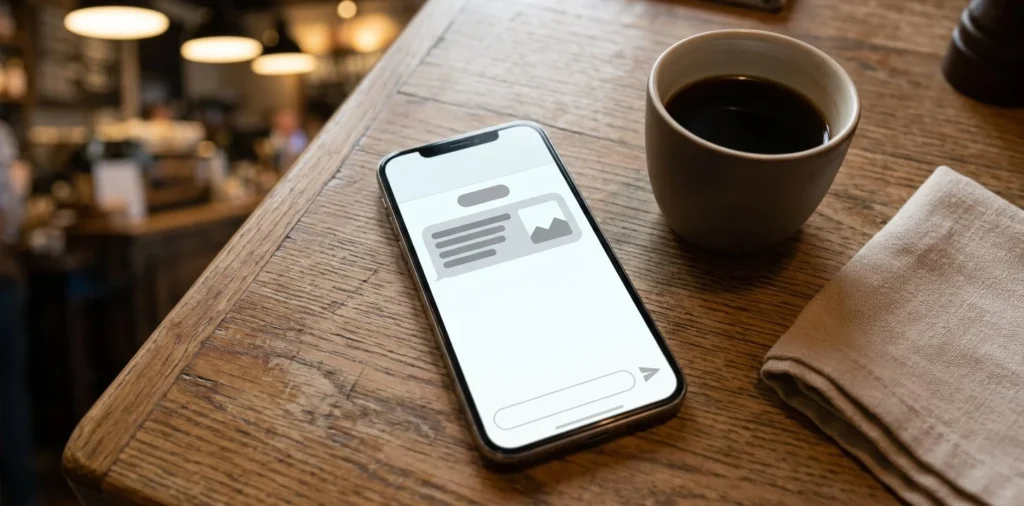
Stay present without being annoying. A message every few weeks, not every few days, keeps the restaurant in a customer’s awareness without becoming intrusive. Our guide on WhatsApp marketing for restaurants in Pakistan covers the specific frequency and approach that works on that channel.
Make reordering effortless. A customer who can reorder their previous meal with minimal effort is considerably more likely to do so than one who has to start the decision process from scratch every time. Remembering previous orders and offering them as a quick option removes friction directly.
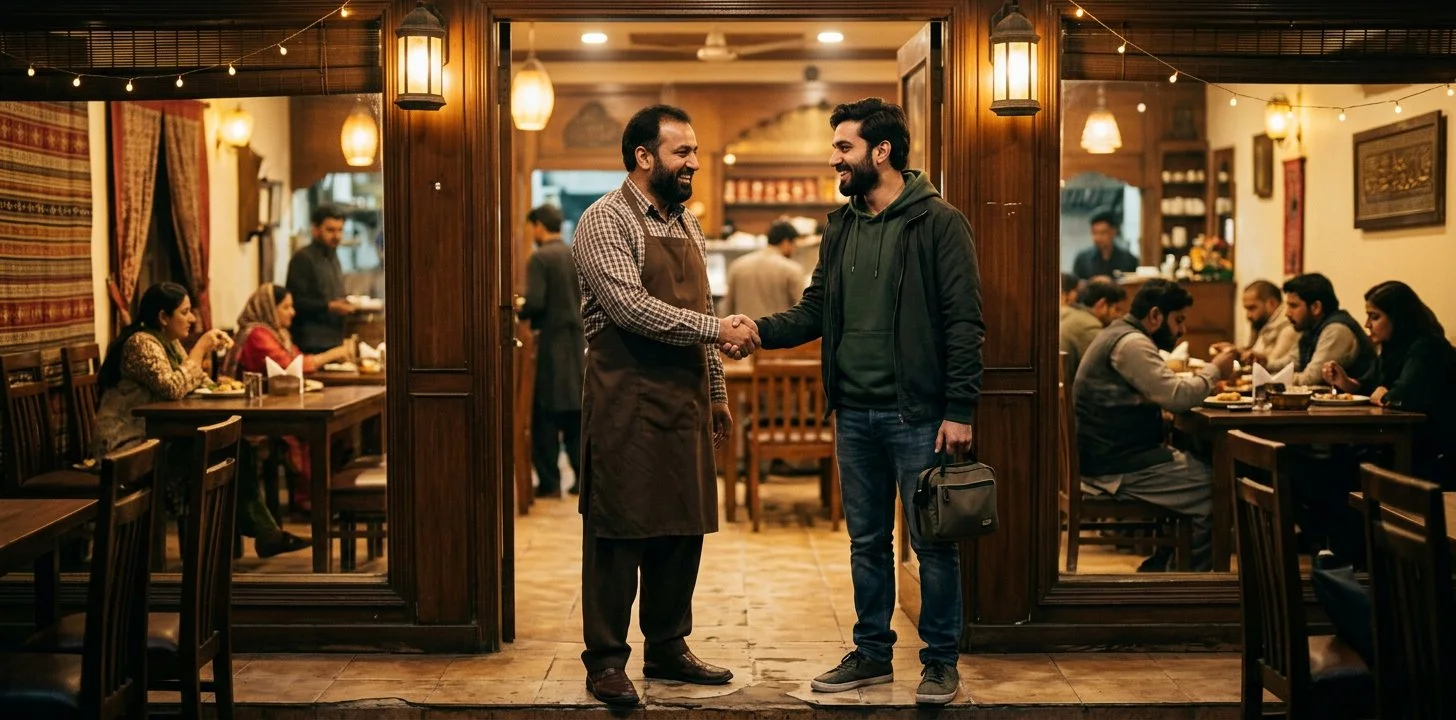
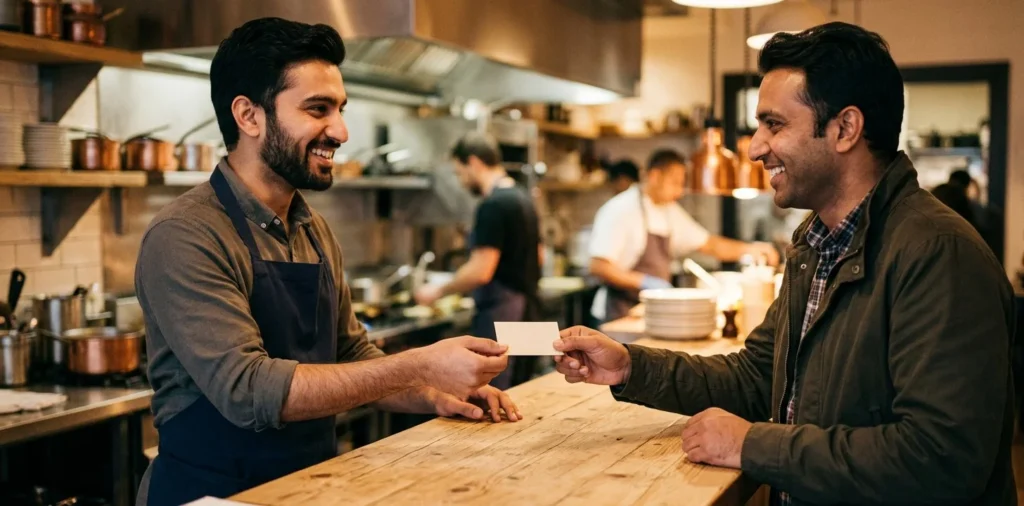
Recognise returning customers. Something as simple as a staff member or a message acknowledging a customer has been before creates a sense of relationship that a purely transactional experience does not. This costs nothing and has a disproportionate effect on how valued a customer feels.
Reward loyalty without training customers to wait for discounts. A loyalty structure that rewards frequency, such as a benefit after a certain number of visits or orders, works differently from constant blanket discounting, because it rewards existing behaviour rather than training customers to delay ordering until an offer appears.
Ask for feedback and act on it visibly. A customer who is asked how their experience was, and who sees that feedback taken seriously, feels a level of investment in the restaurant that a purely anonymous transaction does not build.
Give genuine reasons to return, not just reminders to. New menu items, seasonal dishes, or limited availability items give customers an actual reason to come back beyond simple habit or loyalty alone.
A Practical Loyalty Approach for Pakistani Restaurants
Simple frequency-based rewards work well and are easy to run. A benefit after a set number of orders or visits, tracked through WhatsApp or a simple system, is straightforward to implement without needing a dedicated app or complex infrastructure.
Tie rewards to WhatsApp where the ordering already happens. Since WhatsApp is where most ordering conversation already occurs for Pakistani restaurants, building loyalty tracking into that same channel keeps everything in one place rather than requiring customers to use a separate app or system.
Birthday and occasion recognition. A small gesture around a customer’s birthday, where that information has been collected naturally, creates a memorable moment that a customer is likely to mention to others.
Segment communication by customer value. Your most frequent customers deserve different treatment from occasional ones. A blanket approach that treats every customer identically misses the opportunity to specifically nurture the relationships already generating the most value.ying indefinitely on one original shoot.
Why Discount-Led Retention Backfires
The instinct many restaurants default to is discounting to bring customers back, and it is worth understanding why this often does more harm than good over time.
It trains customers to wait for offers. A customer who learns that a discount arrives periodically simply waits for the next one rather than ordering at full price, which erodes margin on business that would have happened anyway.
It attracts price-sensitive customers specifically. Heavy discount-based marketing disproportionately reaches and retains customers who are motivated by price rather than by genuine preference for the restaurant, which produces a customer base with lower loyalty and lower lifetime value overall.
It devalues the perceived quality of the food. Constant discounting can unconsciously signal that the food is not worth full price, undermining the premium or quality positioning many restaurants are actually trying to build.
Genuine value-based retention costs less over time. A loyalty approach built on recognition, ease of reordering and genuine relationship costs considerably less than sustained discounting, while building a more loyal and higher-value customer base.
Measuring Whether Retention Is Actually Working
Track repeat order rate, not just total order volume. The percentage of customers who order more than once within a given period is the clearest single indicator of whether retention efforts are working, and it is a number very few restaurants actually track.
Track average time between orders for regular customers. A shortening gap between orders from the same customers indicates growing loyalty and habit formation. A lengthening gap is an early warning sign worth investigating before that customer disappears entirely.
Track what proportion of revenue comes from repeat customers versus new ones. A healthy balance provides both stability from the existing base and growth from new acquisition, and tracking this ratio over time reveals whether the business is becoming more or less dependent on constant new customer acquisition.
Our social media marketing service and broader content and automation services help restaurant clients build the systems that support genuine retention rather than relying purely on discount-driven promotions.
To discuss a retention strategy for your restaurant, book a strategy session with our team or get in touch directly. Our earlier guide on restaurant marketing in Pakistan covers the broader strategic picture this fits within.in the Google Business Profile Help Centre.
Brand Builders helps businesses across Pakistan with SEO services. To get started, book a strategy session with our team or get in touch directly.
Book your free strategy sessionFrequently Asked Questions
01Why is customer retention important for restaurants?
Retaining an existing customer costs considerably less than acquiring a new one through advertising or promotion, and repeat customers tend to spend more per visit and refer others, making retention one of the highest-return areas of restaurant marketing.
02What is the best way to build restaurant customer loyalty in Pakistan?
A combination of staying present without overwhelming customers, typically through WhatsApp, making reordering effortless, recognising returning customers personally, and rewarding genuine frequency rather than relying purely on constant discounting.
03Do restaurant loyalty programmes need a dedicated app?
Not necessarily. A simple frequency-based reward tracked through WhatsApp or an existing system is straightforward to run for most independent restaurants without the cost and complexity of building or maintaining a separate app.
04Why do discounts sometimes hurt restaurant retention?
Heavy reliance on discounting trains customers to wait for offers rather than ordering at full price, disproportionately attracts price-sensitive customers with lower loyalty, and can unconsciously signal that the food is not worth its regular price.
05How do I know if my restaurant’s retention efforts are working?
Track repeat order rate, the percentage of customers who order more than once within a given period, alongside the average time between orders for regular customers and what proportion of overall revenue comes from repeat versus new customers.