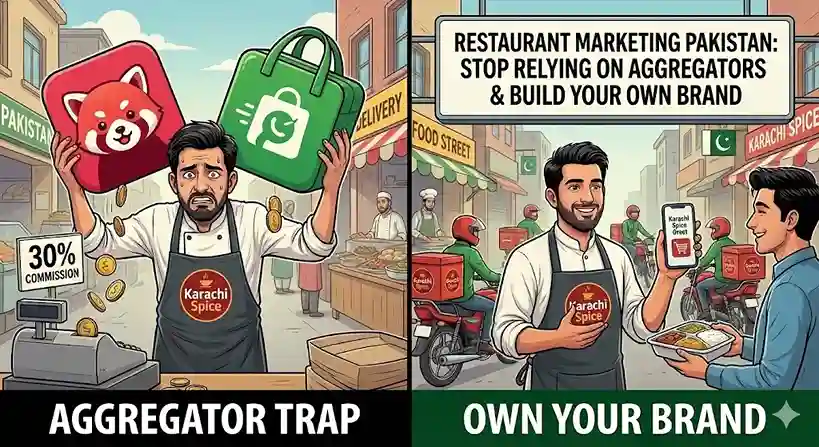
The restaurant marketing in Pakistan is booming, from roadside “Dhabas” upgrading to digital menus, to high-end cafes in Gulberg and DHA. However, many restaurant owners are trapped. While these apps are great for discovery, they shouldn’t be your only channel. This guide explores how to build your own digital demand and keep your hard-earned profits. If you want expert help, see our Meta Ads management.
1. The “Aggregator Trap” (30% Commission)
If you rely 100% on delivery apps, you are essentially working for them. You have no access to customer data, and you can’t retarget them.
- Actionable Insight: Build your own direct ordering website. By investing in custom online store development, you can offer a “Direct Order Discount” (e.g., flat 15% off) which is still cheaper than the commission you pay to apps.
2. Neglecting “Near Me” Searches (Local SEO)
When someone is hungry, they search “Best Biryani near me” or “Coffee shop open now.” If you aren’t in the “Local Pack” (the top 3 map results), you are invisible.
- Strategy: Claim and optimize your Google Business Profile. Upload mouth-watering photos of your signature dishes and respond to every review.
- Service Link: Dominating local search is technical work. Our SEO Services in Lahore can help you rank for specific food keywords in your area.
3. “Appetite Appeal” vs. Bad Photography
Food is visual. A dark, blurry photo of a burger looks unappetizing. In the age of Instagram, your food needs to look as good as it tastes.
- Pro Tip: Don’t just take photos of the food; take photos of the experience (people laughing, cheese pulls, steam rising).
- Resource: If you need professional assets for your menu or social feed, our Graphic Designing Services can turn average photos into scroll-stopping content.
4. The “Foodie” Influencer Bubble
Not all food bloggers are useful. Paying a generic influencer to say “Yum” might get likes, but it rarely brings footfall.
- Best Practice: invite “Micro-Foodies” (5k-20k followers) who specialize in your specific niche (e.g., “Desi Breakfast” or “Steaks”). Their audience is usually more engaged and local.
- Metric: Focus on Saves and Shares rather than just Likes. A saved post means someone plans to visit.
5. Ignoring Menu Engineering
Your digital menu shouldn’t just be a PDF list. It should be a sales tool.
- Strategy: Place your highest margin items (like fries and drinks) at the top or in “Combo Deals.” Use psychological pricing (Rs. 499 instead of Rs. 500).
6. Lack of Loyalty (The “One-Time Eater”)
Getting a customer once is easy; getting them back is the real profit.
- Actionable Insight: Implement a simple SMS or WhatsApp loyalty program. “Buy 5 Coffees, Get the 6th Free.”
7. Geo-Fenced Meta Ads
Why show ads to people in Karachi if your restaurant is in Lahore?
- Solution: Use Meta Ads to target people within a 3-mile radius of your restaurant. Run ads specifically during lunch (11 AM – 1 PM) and dinner (6 PM – 9 PM) hours.
- Service Link: Precision targeting saves money. Our Meta Ads services can help you set up these time-sensitive, location-based campaigns.
8. Not Leveraging User Generated Content (UGC)
Your customers are your best photographers.
- Tactic: Create an “Instagrammable Spot” in your restaurant (a neon sign, a flower wall). Offer a free dessert if they post a story and tag you.
- Result: Free marketing to their hundreds of friends who trust their taste.
9. Failing to Respond to Reviews
A bad review on Google isn’t the end of the world—unless you ignore it.
- Expert Advice: Reply to negative reviews politely. “We are sorry you had a bad experience. Please DM us, and your next meal is on us.” This shows potential customers that you care.
10. The “Vibe” disconnect
You aren’t just selling food; you are selling a vibe. Your social media tone should match your restaurant’s atmosphere.
- Example: A quirky burger joint should use memes and slang in captions, while a fine dining steakhouse should use elegant, minimal language.
Conclusion: Own Your Customer
While apps like Foodpanda are useful for acquisition, reliance on them is dangerous for your bottom line. By building your own brand, optimizing for local search, and creating a loyalty loop, you can turn hungry strangers into regulars.
Are you tired of paying high commissions and want to build your own delivery channel? Book a Growth Strategy Session today.
For help with branding or local SEO, explore our Digital Marketing Services or Contact Us.
Brand Builders helps businesses across Pakistan with Meta Ads management. To get started, book a strategy session with our team or get in touch directly.
Book your free strategy sessionFrequently Asked Questions
01Why should restaurants not rely only on delivery apps?
Delivery apps are useful for discovery, but they take a commission on each order and keep the customer data. Building your own channels lets you retarget customers and keep more of each sale.
02How can a restaurant get more direct orders?
Set up your own ordering website and offer a direct-order discount that costs you less than the app commission.
03How do customers find a restaurant near them on Google?
People search phrases like "best biryani near me". A well-optimised Google Business Profile with good photos and replies to reviews helps your restaurant appear in the map results.
04Do food influencers help a restaurant?
Generic influencers often bring likes but little footfall. Smaller food creators who focus on your type of food and have a local, engaged audience are usually a better fit, and saves and shares matter more than likes.