
In this guide
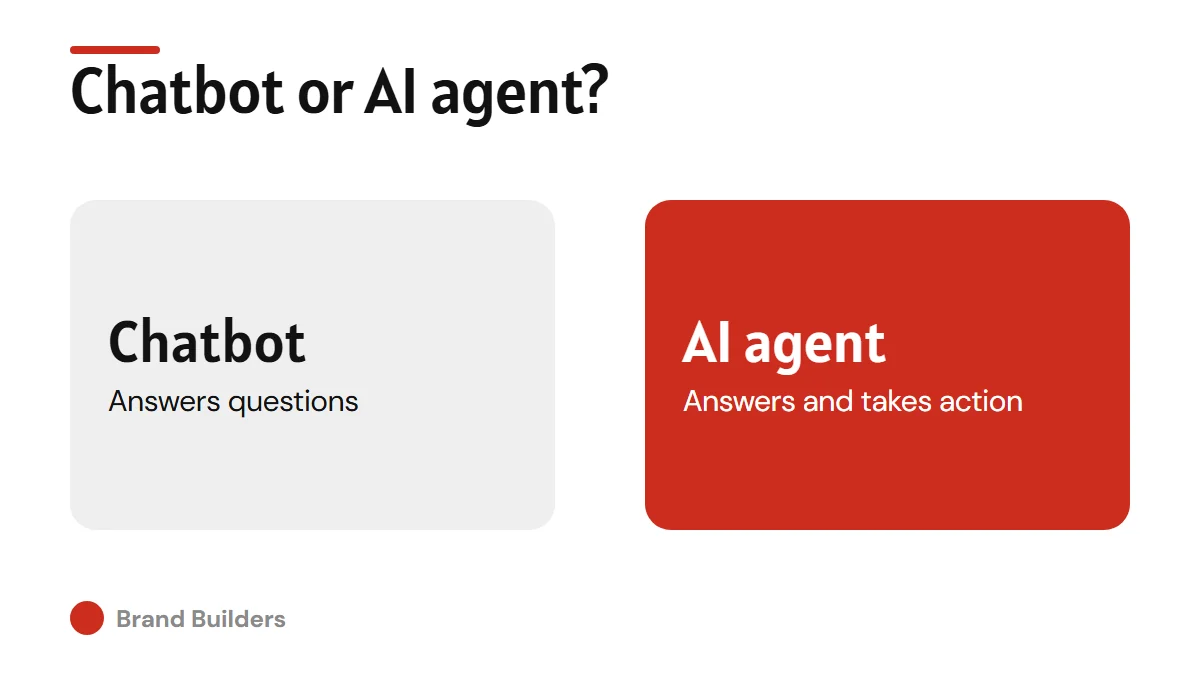
- A chatbot answers questions. An AI agent can also take actions, such as booking a slot or updating a record.
- Intuit's 2026 report found that 77 percent of US businesses use AI regularly and 43 percent say it raised revenue, but this is US data.
- Agents suit narrow jobs: common questions, booking, lead sorting, reminders and reports.
- Keep people in charge of refunds, complaints, health advice, prices and anything with legal risk.
- Start with one job, set limits, check every week and measure before you add more.
Quick answer: AI agents for small business are software helpers that can take several steps toward a goal, such as answering a customer, booking a time and sending a follow up. They work best on narrow, repeatable jobs with a human checking the result. They do not replace staff who handle exceptions, complaints or trust. In the 2026 Intuit report, 77 percent of US businesses used AI regularly, but those results come from the United States, not Pakistan.
You have probably seen posts that say an AI agent can run your business while you sleep. That is not how it works today. An agent can be very useful, but only if you give it a clear job and clear limits. This guide explains what an AI agent is, where it helps a small Pakistani business, where it fails and how to start without risk. Brand Builders works with businesses in Lahore and across Pakistan on WhatsApp and CRM automation, so we see both the good and the messy sides.
Find the first job for AI in your business
What are AI agents for small business?
Most people know chatbots. You type a question and the bot answers. An AI agent goes one step further. It is software that uses an AI model plus a set of tools and rules to work toward a goal. For example, it can read a new enquiry, check your calendar, offer two time slots, book one and send a confirmation message. It can also pass the chat to a person when it is unsure.
The key difference is action. A chatbot talks. An agent does small jobs, usually inside your other tools such as WhatsApp, a calendar, a CRM or a spreadsheet. If you already use a CRM, our guide to GoHighLevel's AI features shows how one tool packages voice and chat assistants.
What do the numbers say about AI in small business?
Real data helps cut through the hype. The best recent source we could open is Intuit's 2026 AI Impact Report, published on 12 May 2026. It uses data from US businesses:
| Measure (US businesses) | Result |
|---|---|
| Use AI regularly | 77%, up from 48% in July 2024 |
| Say AI improved productivity | 78%, up from 46% in July 2024 |
| Say AI increased revenue | 43% (2% say the other way) |
| Paid for dedicated AI tools between 2021 and 2025 | 12% |
| Paid for AI in 2024 and still paid in 2025 | 86% |
Source: Intuit, "2026 AI Impact Report", published 12 May 2026, opened 25 November 2026. US businesses only.
Two points stand out. First, many businesses use AI, but far fewer pay for dedicated AI tools, so most use free or built in features. Second, the people who pay tend to keep paying. We found no equal survey for Pakistan, so treat these figures as a guide, not a forecast for Lahore.
On the demand side, our Google Trends check for Pakistan on 25 November 2026 shows that searches for ChatGPT were about two and a half times those for Gemini. Pakistani owners and their customers already use AI tools, which makes it worth deciding how your business will use them.
Where do AI agents help a Pakistani small business?
Pick jobs that repeat every day, have clear answers and carry low risk.
Answering common questions. Opening hours, price lists, delivery areas and how to book. An agent can answer in English or Roman Urdu at any hour and pass tricky questions to a person.
Booking and rescheduling. It can offer open slots, confirm one and send reminders. This pairs well with the reminders we describe in our post on appointment reminders for clinics.
Sorting new leads. It can ask three short questions, such as what the customer needs, their budget and their timing, and label the lead hot or cold for your team.
Following up. It can send a polite nudge to someone who asked for a price and went quiet, then stop when they reply.
Reports. It can pull the week's enquiries, orders or ad results into a short summary for you to read on Monday.

Where do AI agents fail?
Agents make mistakes, and they make them in a confident voice. Plan for these limits.
Exceptions. A customer who has a special request, a broken order or a complaint needs a person.
Trust. Some customers want a human, especially for health, money or big purchases.
Wrong answers. An agent can state a price or policy that is out of date or simply wrong, if its information is old or missing.
Hidden data risks. An agent that can read your customer list can also leak it if set up badly. Give it access to the least data it needs.
Costs that creep. Each message, each call to an AI model and each tool has a price. If you run it on WhatsApp through the API, Meta now charges for many messages, as we explain in our guide to WhatsApp Business API pricing in Pakistan.
How to start safely
Follow five steps.
Step 1: choose one job. Write it as one sentence, for example "answer the ten most common questions on WhatsApp and book a visit".
Step 2: give it facts. Write a short document with your real prices, hours, areas and policies. The agent should use only that, and say "I will ask a team member" when it does not know.
Step 3: set limits. List what it must never do: promise discounts, give medical or legal advice, take payments or change orders without a person.
Step 4: add a human handover. Make it easy for the customer to reach a person, and make sure someone reads those chats the same day.
Step 5: check weekly. Read a sample of conversations every week. Fix wrong answers, then measure results such as response time, bookings and customer complaints before you add another job.
What does it cost, and what does it save?
Costs vary by tool, so we will not quote prices that could be wrong tomorrow. Think in three parts: the tool subscription, the message or usage fees, and the time to set it up and review it. Then count what it saves: hours of typing the same answers, leads that get a reply in minutes, and appointments that no longer fall through the cracks.
A fair test is to run the agent on one job for a month and compare. If you answered 300 enquiries by hand and spent ten hours on it, and the agent now handles most of them while your team handles the hard ones, you can put a value on those hours. If it creates more complaints than it saves time, stop or narrow the job.
How do AI agents connect with SEO and AI search?
Your customers also use AI to find businesses. They ask ChatGPT or Google's AI features for the best clinic, shop or agency. Those tools read pages that give clear, accurate answers. A website with plain facts, a good FAQ and consistent business details is easier for them to use.
So an AI agent on WhatsApp and a well built website work together. The website attracts people, the agent handles the first replies. Read our guides on getting found on ChatGPT and our SEO services for the findability side.

Questions to ask before you buy any AI agent
Ask the vendor or agency these questions and write down the answers.
What exactly will it do and not do? Which of my data can it read? Where is the data stored? Who reads the conversations? How do customers reach a human? What does each message cost? How do I switch it off? Can I see a log of what it said? If you get vague answers, wait.

Conclusion
AI agents for small business are useful when the job is narrow, the facts are clear and a person stays in charge. The Intuit report shows that many US businesses already use AI and see gains, but we have no equal data for Pakistan, so test on a small job first. Choose one task, write down your facts and limits, check conversations weekly and measure. Brand Builders in Johar Town, Lahore, helps businesses set up WhatsApp, CRM and AI workflows with clear limits. Book a free strategy session and we will help you pick the first job.
Brand Builders helps businesses across Pakistan with digital marketing services. To get started, book a strategy session with our team or get in touch directly.
Book your free strategy sessionFrequently Asked Questions
01What is the difference between a chatbot and an AI agent?
A chatbot answers questions in a chat. An AI agent also takes actions with tools, for example booking a slot in a calendar, updating a customer record or sending a follow up message. Both can make mistakes, so both need limits and a way to reach a person.
02Will AI agents replace my staff?
Not for the whole job. Agents handle narrow, repeatable tasks well. People still handle complaints, special requests, sales conversations that need trust and decisions with risk. A realistic goal is less typing and faster replies, with your team spending time on harder work.
03Are AI agents safe for customer data?
Only if you set them up carefully. Give the agent the least data it needs, keep records of what it does, store data with a provider you trust and never let it share private details. Ask any vendor where the data is stored and who can read it.
04Can an AI agent talk to customers in Urdu or Roman Urdu?
Many tools can handle Urdu and Roman Urdu, but quality varies. Test with real customer messages before you go live, check names, numbers and prices, and have a team member review a sample every week. If the tool struggles, keep it to English or to simple replies.
05Where should a small business start with AI?
Pick one job that repeats daily and carries low risk, such as answering ten common questions or sending appointment reminders. Give the agent your facts, set limits, add a human handover and review chats weekly. Measure response time and bookings before you add another job.