
If you searched for something on Google today and noticed a big AI-generated answer at the top before any website links, you have already seen Generative Engine Optimization in action, whether you knew it or not.
The way people find businesses, answers and services online has fundamentally shifted. And if your business is not adapting to that shift right now, you are quietly becoming invisible to a generation of buyers who no longer scroll through ten blue links to find what they need.
This guide explains exactly what Generative Engine Optimization is, how it differs from traditional SEO, and what businesses in Pakistan and beyond need to do to stay visible in 2026.
What Is Generative Engine Optimization (GEO)?
Generative Engine Optimization, often shortened to GEO, is the process of structuring and optimising your content so that AI-powered platforms such as ChatGPT, Perplexity, Google AI Overviews, and Microsoft Copilot cite your brand as a trusted source when they generate answers to user queries.
Unlike traditional SEO where you compete for a ranked position in a list of links, Generative Engine Optimization is about becoming the source that AI systems pull from, quote and reference when they build their responses.
Think of it this way. When someone asks ChatGPT “what is the best digital marketing agency in Lahore,” the AI does not show a list of ten websites. It synthesises an answer from multiple sources and names the ones it trusts most. Generative Engine Optimization is how you become one of those named sources.

Why Is Generative Engine Optimization Suddenly So Important?
The numbers explain everything.
This is not a future trend. It is happening right now.
The businesses that get cited in AI answers are capturing customers who never even visit a website. They absorb the brand’s name, expertise and recommendations directly from the AI response. The businesses that are not cited simply do not exist in that moment of decision.
Generative Engine Optimization is the discipline that closes that gap.
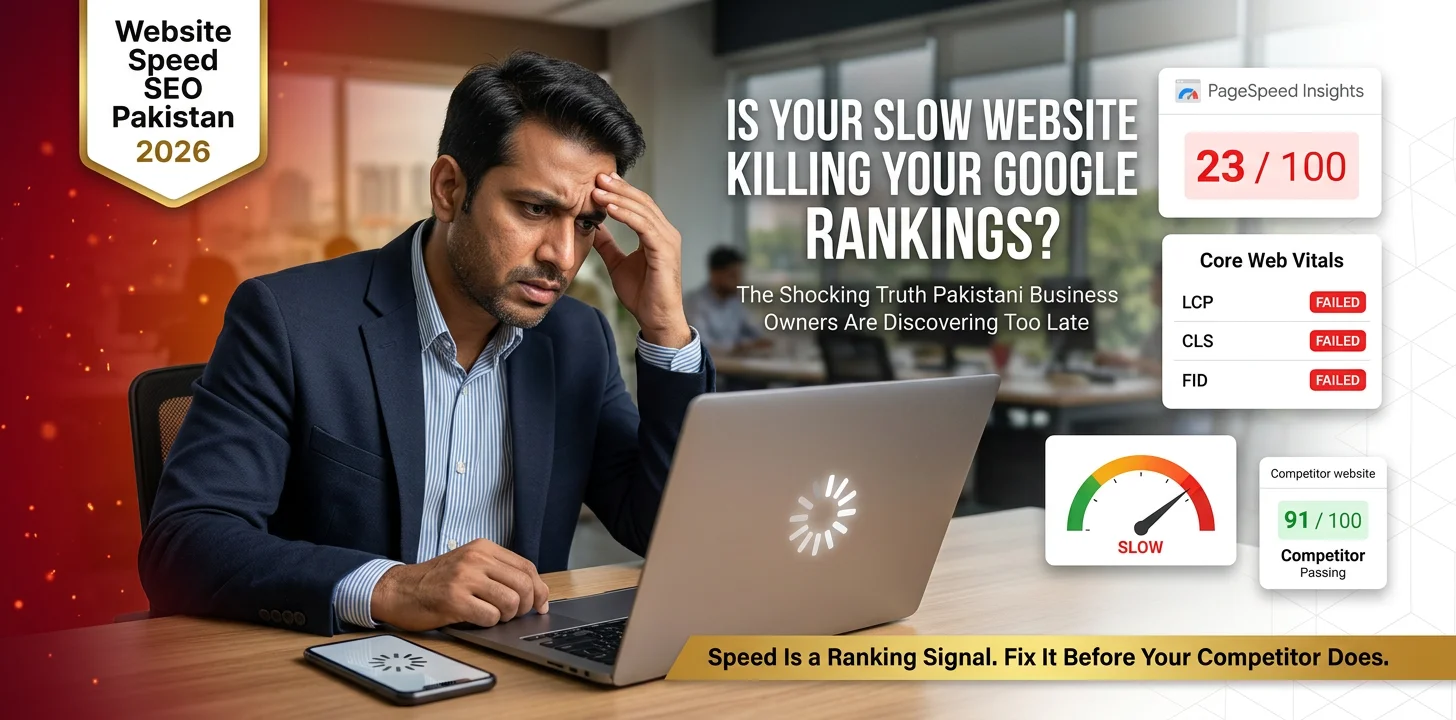
If you want to understand how this fits into your current SEO strategy, read our guide on why your slow website is killing your Google rankings or speak to our team about a Brand Builders SEO audit.
GEO vs SEO vs AEO: What Is the Difference?
Three disciplines now define how brands get found online. Here is a clean breakdown.
Traditional SEO optimises your content to rank in search engine results pages, earning clicks from people browsing Google’s list of links. It remains essential and is not going away.
AEO (Answer Engine Optimization) optimises your content to appear in direct answer features such as Google’s Featured Snippets, People Also Ask boxes, and voice search results. It focuses on being extracted as a quick direct answer.
Generative Engine Optimization (GEO) goes deeper. It targets the synthesis layer of AI systems, ensuring your brand is not just extracted but woven into the narratives AI models construct when answering complex questions. Where AEO focuses on being the answer, Generative Engine Optimization focuses on influencing how AI builds entire responses around broader topics.
The winning formula for 2026 is SEO plus AEO plus GEO working together. According to research from Stackmatix, brands investing in Generative Engine Optimization strategies now are capturing disproportionate visibility during the critical 2026 to 2028 transition period before the competition catches up. (Source: Stackmatix, 2026)
How Does Generative Engine Optimization Actually Work?
AI systems like ChatGPT and Perplexity do not rank websites the same way Google does. They evaluate content differently when deciding what to cite. Here is what drives Generative Engine Optimization performance.
1. Authority and Trustworthiness
AI models are biased toward content that looks credible and evidence-backed. (Source: Surmado, based on Princeton GEO Study, 2026)
2. Content Structure
AI systems need to parse and understand your content quickly. Content that answers questions directly in the first 200 words, uses clear headings, includes structured data schema and FAQ sections, and defines concepts precisely is far more likely to be cited in a generated response.
3. Topical Depth and Coverage
Generative Engine Optimization rewards topic clusters over isolated pages. AI systems want to see that you cover a subject comprehensively across multiple pieces of content, not just one keyword-stuffed page.
4. Entity Clarity
AI models understand brands as entities in a knowledge graph. If your business is consistently named, described and linked across your website, Google Business Profile, social media, directories and third-party sources, AI systems are far more likely to recognise and cite you.
5. Freshness
Platforms like Perplexity that use real-time retrieval reward content that is regularly updated with current data, dates and recent references. Static evergreen content alone is not enough.

5 Practical Steps to Start Generative Engine Optimization Today
You do not need to rebuild your entire website. Generative Engine Optimization starts with smart content decisions.
Step 1: Answer Questions Directly
Every piece of content you publish should answer the most important question within the first two paragraphs, not bury the answer at the bottom. AI systems doing real-time retrieval evaluate opening content most heavily.
Step 2: Add FAQ Sections to Every Blog and Service Page
FAQ sections are one of the highest-impact Generative Engine Optimization actions you can take. They match the conversational query format that AI systems process, they give AI models pre-packaged answers to cite, and they help your content rank in Google’s People Also Ask feature simultaneously.
Pair every FAQ section with FAQ Schema JSON-LD markup so both Google and AI crawlers can interpret the structured data cleanly.
Step 3: Build Topical Authority Around Your Core Services
Rather than writing one blog about digital marketing, build a cluster. Write separate articles covering SEO, social media, paid ads, GHL automation, content marketing and website design, all linking back to a core pillar page. This signals to AI systems that your brand has genuine depth on the topic.
Our team at Brand Builders specialises in building exactly this kind of topical authority content strategy for businesses in Pakistan and internationally.
Step 4: Get Your Brand Mentioned Across the Web
AI systems are more likely to cite brands they have encountered in multiple credible locations. Pursue guest posts, local directory listings, Google Business Profile optimisation, industry citations and PR mentions. Each external reference strengthens your entity authority in the AI’s knowledge graph.
Step 5: Use Schema Markup Across Your Website
Organisation Schema, Article Schema, FAQ Schema, Local Business Schema and Review Schema all help AI systems understand who you are, what you do and why you are credible. If you are unsure where to start, our Brand Builders digital marketing team can audit your site and implement schema across all key pages.
Which AI Platforms Should You Optimise For?
Generative Engine Optimization is not one-size-fits-all. Different platforms behave differently.
Google AI Overviews pull primarily from top-10 organic results, so strong traditional SEO directly supports your Generative Engine Optimization performance here.
Perplexity rewards freshness, domain authority and multi-channel presence. Being active on LinkedIn, publishing regular blog content and earning backlinks all contribute.
Microsoft Copilot leans heavily on LinkedIn for B2B queries. If you are targeting business decision-makers, your LinkedIn company page and articles matter significantly for Generative Engine Optimization.
ChatGPT prefers long-form comprehensive guides with expert quotes, statistics and clear citations. Thin content rarely earns a mention.
Claude (Anthropic) favours well-structured, factually accurate and detailed long-form content. Evidence-backed articles with clear sourcing perform best.
What Businesses in Pakistan Need to Know About GEO
Generative Engine Optimization is not just a trend for multinational brands. It is equally relevant for businesses in Lahore, Karachi and Islamabad targeting local customers as well as international markets.
Pakistani consumers, particularly educated professionals aged 18 to 40, are rapidly shifting to AI-assisted search. Students ask ChatGPT for education consultancy recommendations. Entrepreneurs ask Perplexity which digital marketing agencies in Pakistan are worth working with. Visa applicants ask AI tools which consultancy to trust.
The businesses that have structured their web presence for Generative Engine Optimization now will hold a significant and compounding advantage over the next three years as AI search adoption accelerates across Pakistan and South Asia.
If you are ready to start building your GEO strategy, contact the Brand Builders team today and we will show you exactly where your business stands across AI search platforms.
Final Thoughts
Generative Engine Optimization is not the future of digital marketing. It is the present. Businesses that wait another year to start will spend the following two years trying to recover ground they could have claimed today.
The good news is that the fundamentals of Generative Engine Optimization are accessible to any business willing to invest in quality content, clear structure and consistent brand presence. You do not need to choose between SEO and GEO. You need both, and they reinforce each other.
At Brand Builders, we help businesses across Pakistan, Ireland, Australia and the UK build digital marketing systems that perform on Google, on AI search platforms and everywhere in between. If you want to understand exactly where your business stands for Generative Engine Optimization right now, get in touch with our team today.
Brand Builders helps businesses across Pakistan with SEO services. To get started, book a strategy session with our team or get in touch directly.
Book your free strategy sessionFrequently Asked Questions
01What is Generative Engine Optimization in simple terms?
Generative Engine Optimization (GEO) is the practice of optimising your website content so that AI tools like ChatGPT, Google AI, and Perplexity cite your brand when they answer questions related to your business or industry.
02Is Generative Engine Optimization different from SEO?
Yes. Traditional SEO helps you rank in Google’s list of links. Generative Engine Optimization helps you get cited inside AI-generated answers, which is a fundamentally different way people are now finding information. Both are important in 2026 and work best together.
03Does Generative Engine Optimization replace SEO?
No. Generative Engine Optimization builds on your SEO foundation rather than replacing it. Strong traditional SEO, particularly domain authority and high-quality content, directly supports your GEO performance because many AI platforms pull from top-ranking organic results.
04How long does Generative Engine Optimization take to show results?
Results from Generative Engine Optimization typically begin to appear within 3 to 6 months, similar to traditional SEO. Brands that already have strong content authority and backlink profiles may see citations in AI answers sooner.
05Can small businesses do Generative Engine Optimization?
Absolutely. Generative Engine Optimization does not require a large budget. It starts with creating well-structured, authoritative content that answers the questions your customers are already asking AI tools. Small businesses that act now have a significant opportunity to get cited before larger competitors catch up.
06Which AI platforms should I focus on for Generative Engine Optimization?
The most important platforms in 2026 are Google AI Overviews, ChatGPT, Perplexity, and Microsoft Copilot. Each behaves slightly differently, but the core Generative Engine Optimization principles of authoritative content, expert quotes, structured data and consistent entity presence apply across all of them.