
Aesthetic clinic marketing sits in an unusual position. It is healthcare, so trust and credibility matter enormously. But it is also elective and discretionary, which means the client is choosing to spend rather than needing to. And it is heavily regulated in ways that general service marketing is not. If you want expert help, see our web development services.
Get that combination wrong and you either fail to build enough trust to convert, or you build the wrong reputation entirely. This guide covers what actually works for aesthetic clinics, what the compliance boundaries are, and how the clinics attracting high value long term clients differ from those competing on price.
Understand Who You Are Actually Marketing To
The most common failure in aesthetic clinic marketing is treating all potential clients as one audience. They are not, and the difference determines everything about the message.
The first-timer. Curious, nervous, and researching heavily before making contact. Their dominant concern is safety and whether they will look unnatural. They are not comparing prices seriously because they do not yet know what good looks like. What converts them is reassurance, education and visible credibility.
The experienced client switching clinics. Already familiar with treatments and usually leaving somewhere for a reason, most commonly a result they were unhappy with or a practitioner who did not listen. What converts them is evidence of practitioner skill and a consultation process that feels genuinely individual.
The price shopper. Comparing costs across clinics and choosing the cheapest. These clients rarely return, rarely refer, and frequently arrive with unrealistic expectations. Marketing that leads with discounts attracts this group disproportionately.
The clinics that build sustainable businesses market deliberately to the first two and largely ignore the third. That single decision changes what you post, what you advertise and how you price.
Trust Is the Product
In aesthetics, the client is not buying a treatment. They are buying confidence that the person holding the needle knows what they are doing.
That has direct implications for what your marketing needs to demonstrate.
Practitioner credentials, clearly stated. Medical qualifications, specific training in the treatments offered, and years of experience. Not buried in an about page but visible where decisions are made.
Evidence of judgement, not just technique. Content that explains why a practitioner would recommend against a treatment, or how they assess whether someone is a suitable candidate, builds more trust than content showing results. It signals that the clinic will tell you the truth rather than sell you something.
A consultation process that sounds thorough. Describing what actually happens in a consultation, including assessment, discussion of expectations and honest conversation about what a treatment can and cannot achieve, reassures the nervous first-timer more than any result image.
Genuine client experiences. Testimonial content where a real person describes how they felt beforehand, how the consultation went, and how they were looked after afterwards. The emotional journey matters more here than the visual outcome.

The Compliance Reality
This is where a great deal of aesthetic clinic marketing advice is quietly dangerous, because it recommends tactics that create genuine regulatory risk.
Prescription treatments cannot be advertised to the public in many jurisdictions. In the UK and several other markets, promoting prescription-only medicines directly to consumers is prohibited. That has significant practical implications for how injectable treatments can be discussed publicly. The rules vary by country, so clinics need to know the position in the market they operate in rather than copying content from clinics elsewhere.
Before and after imagery carries restrictions. Both advertising platforms and professional regulators impose limits on how results imagery can be used, particularly in paid advertising. Meta platforms specifically restrict content implying knowledge of personal attributes or promising physical transformation.
Claims must be substantiable. Language guaranteeing results, promising permanence, or claiming superiority over other clinics creates exposure under advertising standards rules in most markets.
Discount and urgency tactics attract scrutiny. Time-limited offers on medical procedures are viewed unfavourably by regulators in several jurisdictions because they encourage rushed decisions about treatments that warrant proper consideration.
The practical approach is education-led content rather than promotion-led content. It happens to be both more compliant and more effective at attracting the clients you actually want. Advertising standards guidance is published by bodies such as the Advertising Standards Authority, and platform-specific policies are documented in the Meta Business Help Centre.
What Actually Works
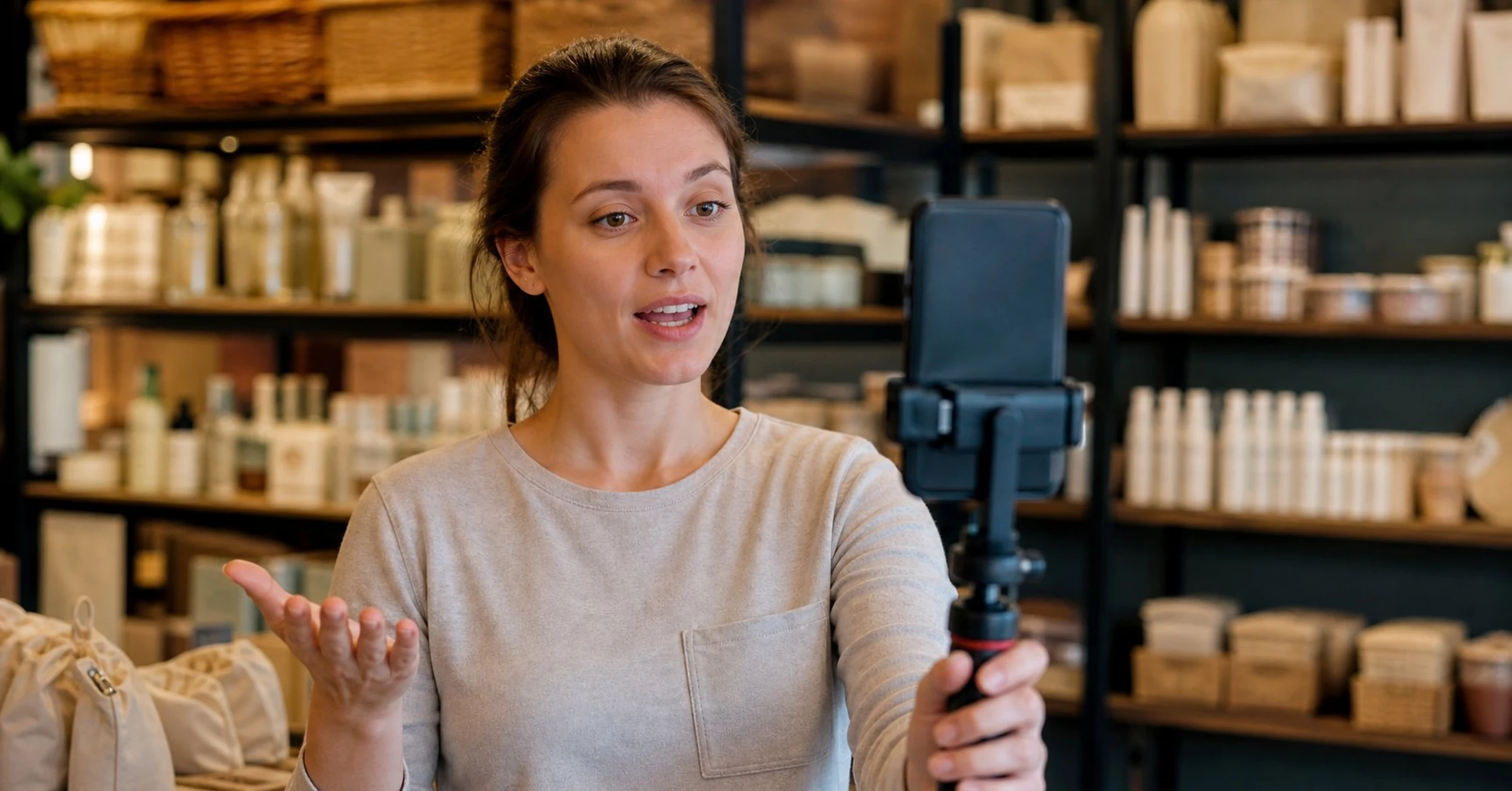
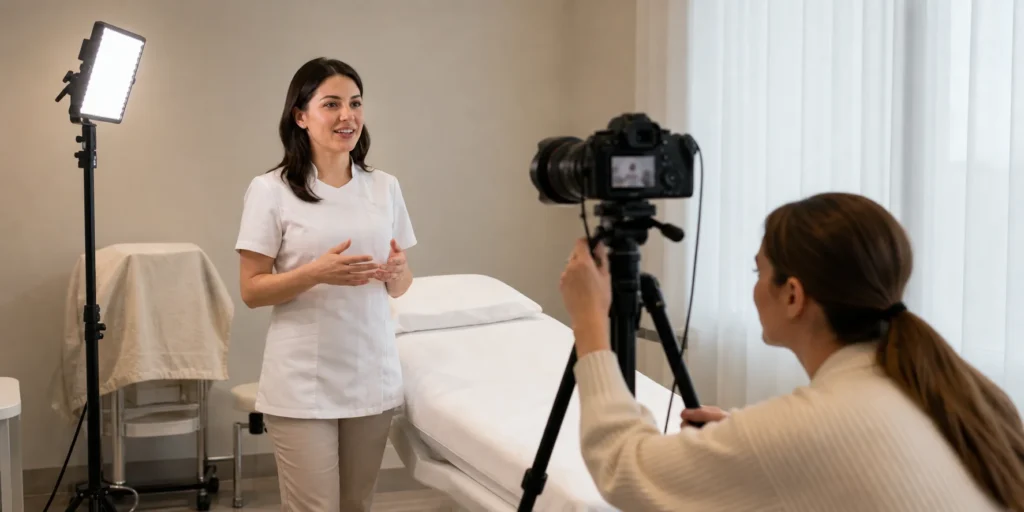
Educational video from the practitioner. Explaining what a treatment involves, who it suits, what recovery looks like, and importantly who it does not suit. This is the highest converting content type in aesthetics because it addresses the safety concern directly while demonstrating expertise.
Consultation-focused content. Describing the assessment process, what questions will be asked, and how treatment plans are decided. This reassures people who are worried about being pressured into something.
Honest content about realistic outcomes. Content that explains what a treatment can genuinely achieve and what it cannot builds disproportionate trust in a market where overpromising is common.
Client experience testimonials. Focused on how the person felt and how they were treated rather than on visual results.
Local search visibility. Aesthetic clients search locally and compare a small number of clinics. A fully optimised Google Business Profile with recent reviews is one of the highest return assets available. Our guide on Google Business Profile optimisation in Pakistan covers the process.
A website that answers questions before they are asked. Detailed treatment pages covering process, suitability, recovery and aftercare reduce the anxiety that stops people making contact.
Our website development service builds clinic sites structured around this, and our content creation services handle the video and written content production.
What Damages Aesthetic Clinics
Discount-led promotion. Attracts price shoppers, devalues the practitioner’s skill, and creates a client base that leaves the moment a cheaper option appears. It also positions a medical procedure as a commodity purchase, which is precisely the framing that leads to unrealistic expectations and complaints.
Overpromising in copy. Language suggesting dramatic transformation sets expectations that treatment cannot meet. Disappointed clients leave negative reviews and do not return.
Heavy filtering and editing of result imagery. Clients notice, and it undermines trust in everything else the clinic says.
Marketing that targets insecurity. Content framed around what is wrong with someone’s appearance may generate short term engagement but builds a reputation the clinic will struggle to shift, and increasingly attracts regulatory attention.
Inconsistent posting followed by silence. In a trust-driven market, a dormant social presence raises questions about whether the clinic is still active and doing well.
Ignoring negative reviews. Prospective clients read responses to judge how a clinic handles dissatisfaction. Defensive or absent responses do more damage than the original review.
The Aesthetic Market in Pakistan
There are specific considerations for clinics in Lahore, Karachi, Islamabad and across Pakistan.
The market is growing quickly and trust is the main differentiator. With relatively little standardisation in how clinics present themselves, a clinic that communicates clearly about qualifications, process and realistic outcomes stands out considerably.
WhatsApp is the enquiry channel. Most aesthetic enquiries in the Pakistani market arrive and convert through messaging rather than phone or email. Making it easy to message, and responding quickly, matters more than almost anything else operationally.
Privacy expectations are high. Many clients do not want their treatment publicly known. Marketing that assumes clients will happily appear in content will find fewer willing participants than in other markets. Building testimonial content around voice or written experience rather than identifiable imagery works better.
Language matters. Content in Urdu, or a natural mix of Urdu and English, reaches a broader local audience. Clinics targeting a specifically premium segment may find English appropriate.
Brand Builders already works with aesthetic and dental clinics in Pakistan. Our existing guidance on marketing for aesthetic clinics in Pakistan covers the local market specifically.
What to Avoid
Before and after imagery in paid campaigns. Carries platform policy restrictions and professional regulatory considerations. Testimonial video performs better and avoids the issue entirely.
Posting about the practice rather than for the patient. Anniversary posts, equipment purchases and holiday greetings generate no demand.
Buying followers or engagement. Creates an audience that will never book and distorts your data.
Chasing follower count as a goal. Follower numbers do not correlate with appointments. Enquiries do.
Inconsistent posting. Three months of activity followed by six months of silence is worse than a slower sustainable cadence.
Ignoring comments and messages. An unanswered question in the comments is a lost patient and visible evidence to everyone else that the practice does not respond.
Where to Start
If you are building aesthetic clinic marketing from a weak position, the sequence that produces results fastest is fairly consistent.
Complete your Google Business Profile fully and build a systematic review request process, because local visibility and social proof underpin everything else.
Set up fast enquiry response, particularly on WhatsApp, because aesthetic enquiries are time sensitive and clients frequently contact several clinics at once.
Film a small library of educational videos with the practitioner covering your main treatments, focusing on process and suitability rather than results.
Build detailed treatment pages on your website that answer the questions clients are actually researching.
Only then add paid advertising, because with trust content and conversion systems in place every advertising pound produces meaningfully more.
To discuss a plan for your clinic, book a strategy session with our team or get in touch directly.
Research on patient decision making in aesthetic medicine is published in the Journal of Cosmetic Dermatology.
Brand Builders helps businesses across Pakistan with web development services. To get started, book a strategy session with our team or get in touch directly.
Book your free strategy sessionFrequently Asked Questions
01What is the most effective aesthetic clinic marketing strategy?
Educational video content from the practitioner combined with strong local search visibility and fast enquiry response. Aesthetics is a trust purchase, so content demonstrating expertise and judgement outperforms content showing results.
02Can aesthetic clinics advertise injectable treatments?
This depends entirely on jurisdiction. In the UK and several other markets, advertising prescription-only medicines to the public is prohibited, which significantly restricts how injectable treatments can be promoted. Clinics should confirm the rules in their own market rather than copying content from elsewhere.
03Should aesthetic clinics use before and after photos?
They carry restrictions from both advertising platforms and professional regulators, particularly in paid advertising. Where permitted, unedited and consistently lit imagery with proper consent is essential. Client experience testimonials often perform better and carry fewer complications.
04How do aesthetic clinics attract high value clients?
By marketing on expertise, safety and consultation quality rather than on price. Discount-led marketing systematically attracts clients who do not return or refer, while education-led marketing attracts clients making a value decision.
05Does social media work for aesthetic clinics?
Yes, but educational content works far better than promotional content. Organic social builds familiarity and trust over time. Paid social generates enquiries but must be structured carefully to stay within platform policies for health and cosmetic advertising.